Fluorine-free Water and Oil Repellent Coating
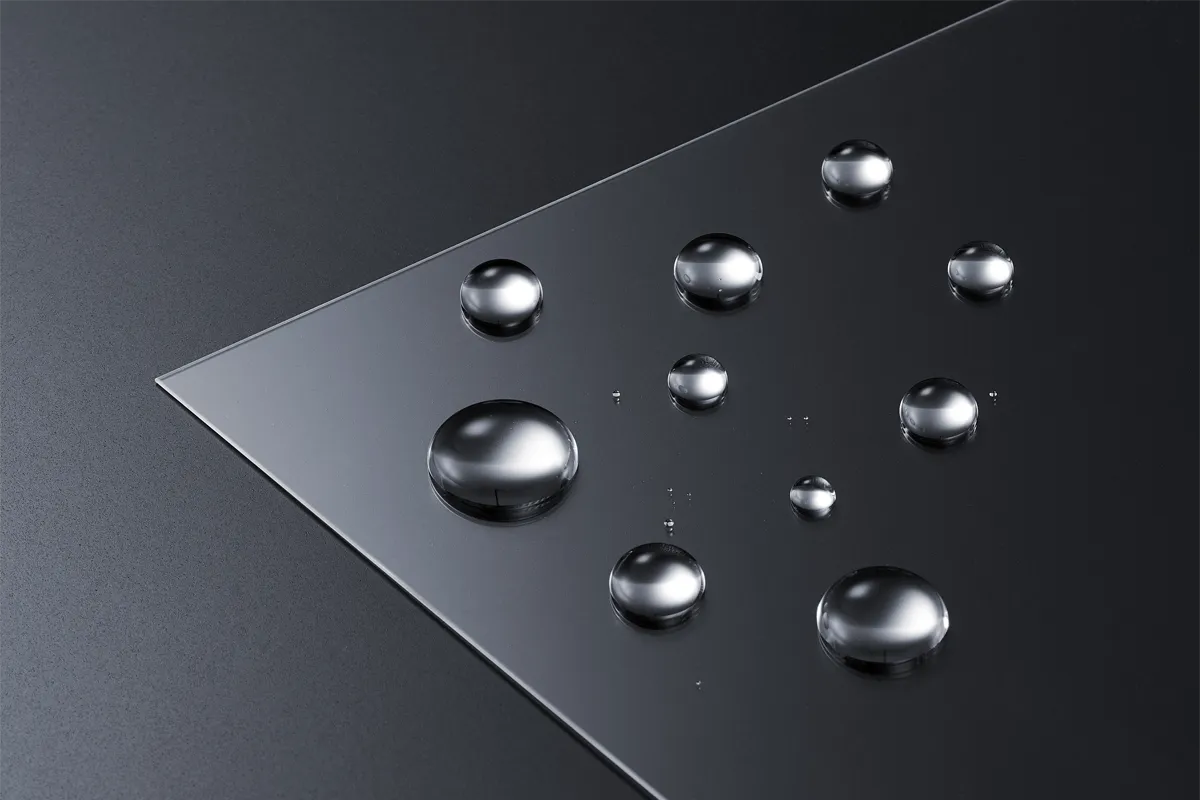
This transparent coating is designed to comply with PFAS regulations while maintaining excellent hydrophobic and oleophobic performance. Compatible with a wide range of substrates, including glass, metals, and textiles, it is used in applications across the display, medical, and electronics industries. The lineup includes a high heat-resistant type that retains its water and oil repellent properties even after prolonged exposure to temperatures up to 300℃, a wear-resistant type with enhanced scratch resistance, and a low-friction type for applications requiring excellent slidability. Coatings can also be customized to meet specific substrate and performance requirements. NEG provides integrated coating solutions, from material design to coating application, delivering coating services tailored to each customer's specifications and performance requirements.
What is Fluorine-free Water and Oil Repellent Coating?
NEG has developed Fluorine-free Water and Oil Repellent Coating, a coating technology that provides water and oil repellent performance without the use of PFAS. In addition to its excellent repellency, the coating delivers high durability.
Whether a liquid wets a solid surface depends on whether the total free energy of the system decreases when the liquid spreads across the surface. When a solid surface has low surface free energy, the energetic benefit gained by liquid spreading is small. As a result, water and oil tend to minimize their contact area with the surface, making the surface less susceptible to wetting. Fluorinated materials possess extremely low surface free energy, providing repellency not only to water but also to oil and other liquids. In addition, their highly stable chemical bonds contribute to excellent durability. For this reason, fluorinated materials have long been used as the primary materials for water and oil repellent applications.
In recent years, regulatory restrictions on PFAS and other fluorinated organic compounds have been strengthened due to concerns about their persistence in the environment. In response to these trends, NEG's Fluorine-free Water and Oil Repellent Coating has been designed without the use of fluorinated compounds. As a result, it can also comply with total fluorine analysis, which is commonly used as a screening method for PFAS.
At NEG, the chemical structure of the coating surface is designed according to the intended application and substrate. This approach enables us to reduce surface free energy and create a surface that resists the spreading of water and oil without relying on fluorinated materials. In general, PFAS-free coatings tend to face challenges in maintaining long-lasting water and oil repellent performance. Leveraging decades of expertise in glass surface technologies, NEG has developed a surface design that balances functionality and durability by optimizing the bonding between coating components and the substrate surface. This surface design concept is not limited to glass and can also be applied to other substrates, including metals.
-
PFAS (Per- and Polyfluoroalkyl Substances): A collective term for perfluoroalkyl and polyfluoroalkyl substances, a group of fluorinated organic compounds that is estimated to include more than 10,000 individual chemicals. Due to their excellent water resistance, heat resistance, and oil resistance, PFAS have been widely used in a variety of products and applications. However, concerns have grown regarding their persistence in the environment, potential for bioaccumulation, and possible impacts on human health.
Features
-
Water and oil repellency
High contact angles against both water and oil enable excellent water and oil repellency.
-
PFAS regulation compliance
Free of fluorinated compounds and designed to support compliance with PFAS regulations. The coating also contains no other environmentally regulated substances.
-
Visible to near-infrared transparency
No light absorption across the visible to near-infrared wavelength range, preserving the inherent optical properties of the substrate.
-
Low friction (low-friction type)
Reduced coefficient of friction for applications requiring excellent sliding performance, even under demanding conditions.
-
High heat resistance (high heat-resistant type)
Retains water and oil repellent performance even after prolonged exposure to temperatures up to 300℃.
-
High durability (wear-resistant type)
Excellent resistance to abrasion and scratching for use in demanding environments.
Applications

.webp)
Medical monitors
-
Prevents contamination and stain adhesion on monitor surfaces
-
High transparency and excellent anti-contamination performance
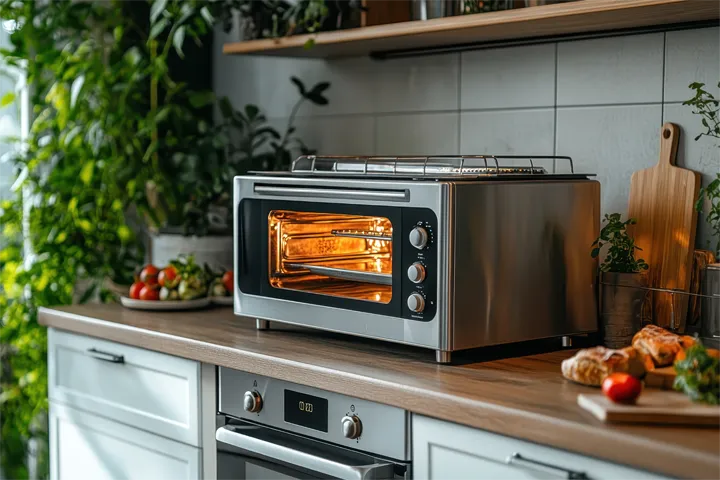
Microwave Ovens
-
Prevents contamination and stain adhesion on viewing windows
-
High heat resistance, high transparency, and excellent anti-contamination performance
Smart Glasses
-
Prevents contamination and stain adhesion on lenses
-
High transparency and excellent anti-contamination performance
Copiers
-
Prevents contamination and paper dust adhesion
-
High transparency and excellent abrasion resistance
Properties
| Properties | Coated glass | Uncoated glass | |
| Items | Unit | ||
| Contact angle (DI water) | deg | 105 | <5 |
| Contact angle (oleic acid) | deg | 54 | 28 |
| Contact angle (Olive oil) | deg | 56 | 29 |
| Haze | % | 0.2 or less | 0.2 or less |
| Transmittance | % | 91.9 | 91.9 |
| Coefficient of static friction | - | 0.07 | 0.45 |
| Coefficient of kinetic friction | - | 0.04 | 0.45 |
-
Coated OA-11 glass (thickness: 0.5mm)
OA-11: Alkali-free glass manufactured by NEG
Transmission Spectrum
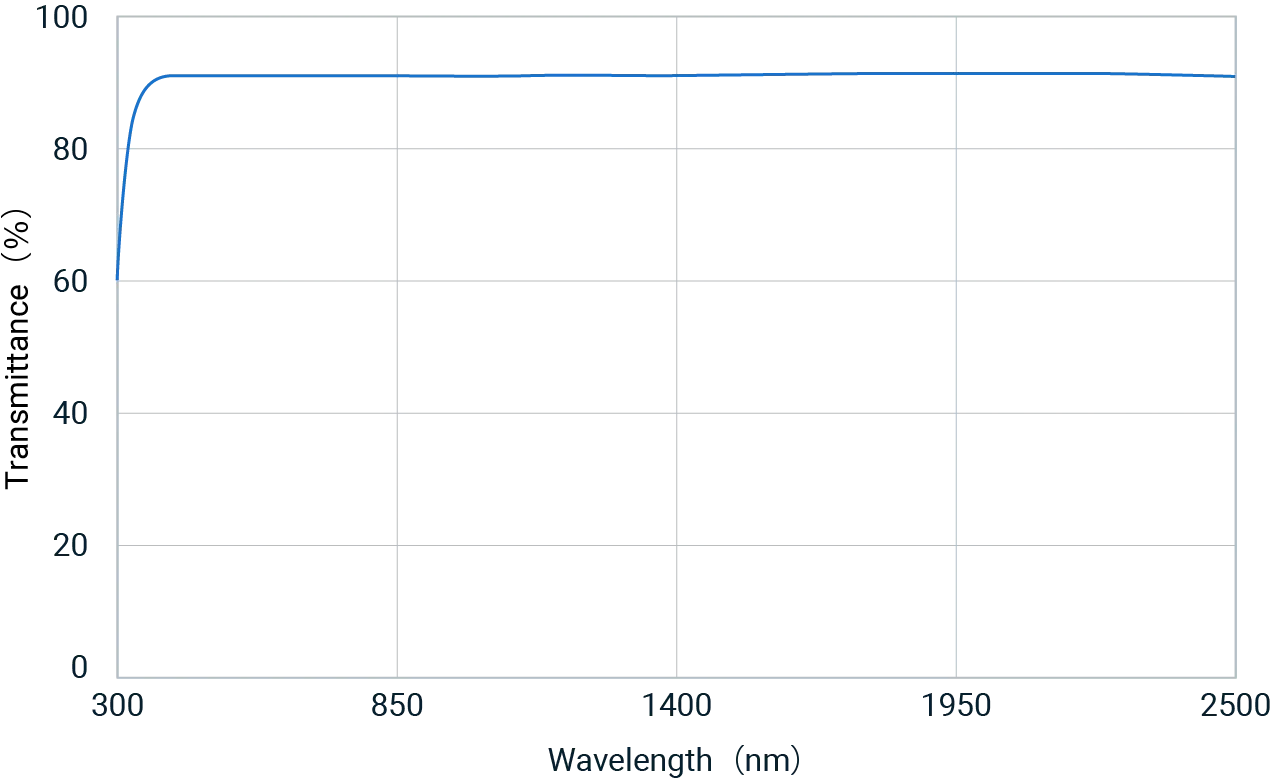
The coating exhibits transmittance of more than 91% across the visible to near-infrared wavelength range, indicating negligible absorption by the coating.
-
Measured using coated OA-11 glass (thickness: 0.5mm)
Coating thickness: 20nm (single-side coating)
OA-11: Alkali-free glass manufactured by NEG
Product Lineup
-
Reduced friction and improved resistance to contamination. Suitable for cover glass used in smartphones, automotive displays, and medical monitors.
-
Excellent resistance to abrasion and scratching. Suitable for automotive cameras, sensors, and medical device surfaces.
-
Retains water and oil repellent performance even after repeated heating at temperatures up to 300℃. Suitable for high-temperature environments such as ovens and furnaces.
| Properties |
High Heat-resistant Type |
Wear-resistant Type |
Low-friction Type |
| Transparency |
♔ | ♔ | ♔ |
| Heat resistance |
♔ | ||
| Chemical resistance |
◎ | ||
| Scratch resistance |
♔ | ||
| Weather resistance |
◎ | ||
| Slidability |
♔ | ||
| Cleanability |
◎ |
*The product lineup shown above is intended as a general guideline. Coating formulations and conditions can be optimized to meet specific customer requirements. Please share your detailed specifications so that we can recommend the most suitable solution.
Compatible Substrates
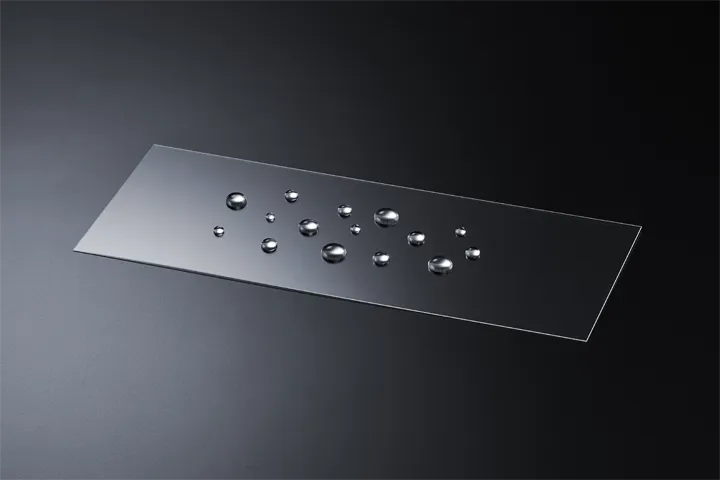
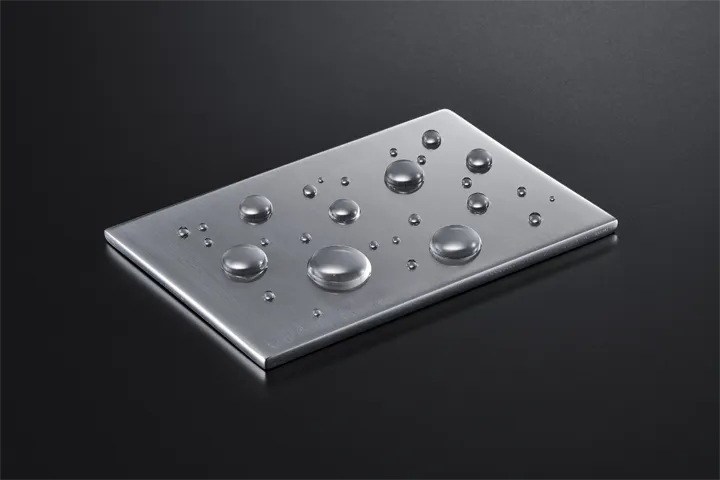
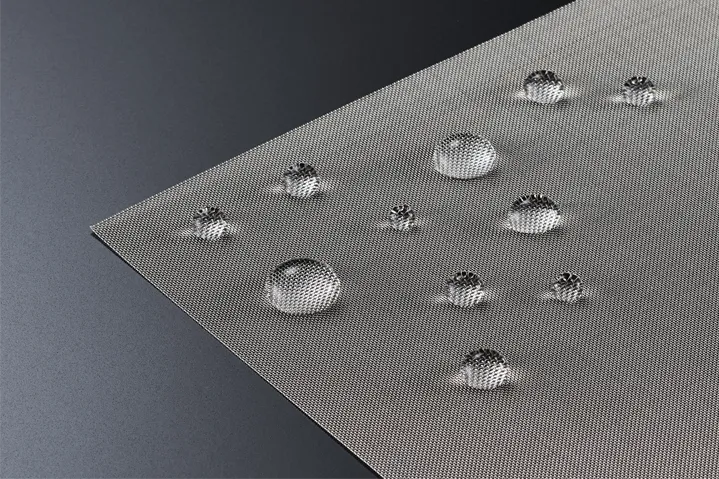
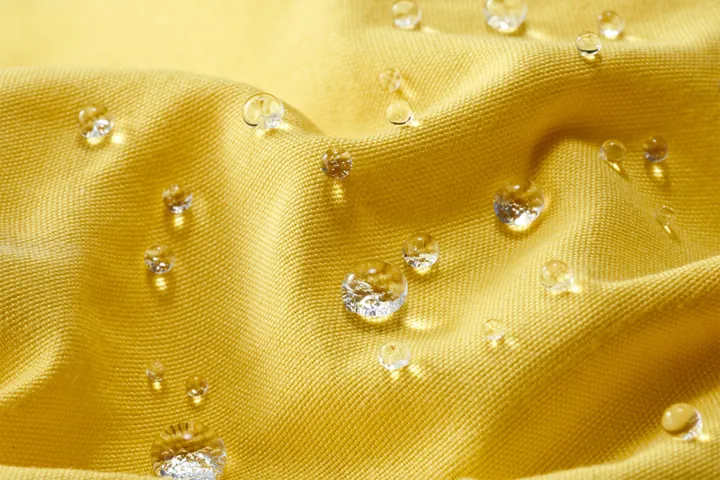
Compatible with a wide range of substrates, including glass, metals, metal mesh, and textiles.
The coating follows substrate deformation even under bending stress, helping to prevent cracking and delamination.
Durability
Cross-cut Adhesion Test
Test result: Classification 0 (best rating)
→ Excellent adhesion, no peeling
Classification 0 indicates that no significant coating detachment is observed within the cross-cut area, demonstrating excellent coating adhesion.
.webp)
Damp heat test 80℃/80%RH, 4800hr
| Test item | Initial value | after value | Judgement |
| Contact angle | 105° | 101° | Perfomace maintained |
| Appearance | Good👍 | Good👍 | No abnormalities |
*Coated T2X-1 glass (thickness: 1.3mm)
T2X-1 : Chemically strengthened glass manufactured by NEG
*The data are reference values and not guaranteed values.
Abrasion Resistance Test
| Test item | Initial value | after value | Judgement |
| Contact angle | 105° | 91° | Perfomace maintained |
| Appearance | Good👍 | Good👍 | No abnormalities |
Abrasive material: steel wool (#0000)
Load: 500 g
Motion: 10,000 reciprocating cycles, stroke length 60mm, speed 60mm/s
*Coated T2X-1 glass (thickness: 1.3mm)
T2X-1 : Chemically strengthened glass manufactured by NEG
*The data are reference values and not guaranteed values.
Frequently Asked Questions (FAQ)
A. Evaluation testing can be conducted according to your substrate and application requirements. Please contact us through the inquiry form and provide details such as the substrate material, dimensions, and operating conditions. After reviewing your requirements, we will recommend the most suitable coating solution and evaluation conditions.
A. Yes. The coating is typically heat-treated at temperatures between 100℃ and 300℃ after application. Heat treatment enhances the bonding between the coating and the substrate, resulting in improved durability and more stable performance.
A. The coating has a thickness of 20 to 200nm. It provides water and oil repellent performance while minimizing the impact on the appearance and dimensional accuracy of the substrate.
A. Yes. Coating methods can be selected and optimized according to the shape and size of the substrate. The coating can be applied to large-area components and complex-shaped substrates.
A. Yes. The coating can be combined with other surface treatments. Please contact us regarding compatibility and evaluation. For example, combining the coating with an anti-reflective (AR) coating can help improve visibility.
A. The coating is compatible with a wide range of substrates, including glass, metals, and plastics. Since compatibility varies depending on the substrate, please contact us for details.
A. The coating has a pencil hardness of 6H or higher and provides excellent resistance to abrasion. In addition, the coating is designed with consideration for molecular-level bonding to the substrate surface, ensuring strong adhesion and long-term performance durability.
A. The coating offers excellent resistance to alcohol-based solvents, and no significant changes have been observed before and after exposure. Please contact us regarding compatibility with other solvents.