Addressing Climate Change
Basic Policy
Glass manufacturing processes require a significant amount of energy, and we have made it a top priority to reduce the greenhouse gas emissions from our melting furnaces.
In November 2021, we declared our support for the Task Force on Climate-related Financial Disclosures (TCFD)*1 recommendations for analyzing climate change risks and opportunities for our business. Our efforts include disclosing the potential financial impacts of the risks and opportunities and details about the measures, metrics and targets of our Carbon Neutrality Action Plan*2.
Our goal is to be the world’s most efficient and environmentally friendly glass manufacturer.
-
TCFD dissolved in October 2023 and was succeeded by the International Financial Reporting Standards (IFRS) Foundation.
-
For further details about our Carbon Neutrality Action Plan, please see the column on “Metrics and Targets” in the section “Initiatives to Achieve Targets.”
Oxy-Fuel Firing Glass Melting Furnaces
An oxy-fuel firing furnace differs from an air combustion furnace in that nitrogen is not taken into the furnace, which means that less exhaust gas, and consequently exhaust heat, is produced, thus reducing fuel consumption and CO2 emissions. Furthermore, the generation of thermal nitrogen oxides (NOx) in a furnace is reduced. In fiscal 1993, we installed Japan’s first oxy-fuel firing glass melting furnace. This technology has now been adopted for almost all of our furnaces.
Fuel Conversion in Glass Melting Furnaces
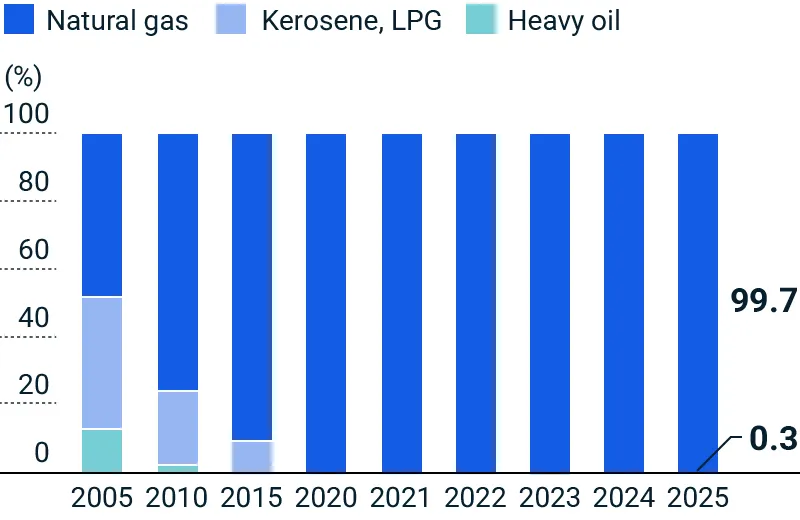
For more than 20 years, we have been shifting to fuels that produce lower carbon emissions, actively switching to the use of natural gas. In fiscal 2010 we completely stopped using heavy oil, and in fiscal 2025 we achieved a natural gas usage rate of 99.7%.
We are currently developing combustion technologies that do not emit CO2. In fiscal 2022, we developed a hydrogen–oxygen combustion burner, which runs entirely on hydrogen fuel, and used it successfully in glass melting demonstration experiments. The combination of hydrogen fuel and oxygen combustion technology makes possible highly efficient glass melting.
Carbon Neutral Initiatives
Governance and Risk Management
Our governance framework for overall sustainability is outlined in our Sustainability Foundation. Our approach to climate-related risks and opportunities is as follows.
Sustainability Committee
The Environmental Team identifies and reviews climate-related risks and opportunities through interviews with staff and business departments in line with the TCFD framework, and conducts scenario analysis to assess and review their potential business impacts. The division responsible for these risks and opportunities promotes the Carbon Neutrality Action Plan, which is central to the Group’s strategic resilience. The Environment Team regularly presents regular progress reports to the Sustainability Committee.
The climate-related risks and opportunities, as well as countermeasures, identified and evaluated by the Environment Team are integrated into the periodic risk assessment conducted by the Group in line with our basic policy on internal control. The responsible divisions implement appropriate countermeasures.
Strategies
Scenario Analysis
We have carried out the following scenario analysis in order to evaluate the business impacts under different scenarios, as well as to evaluate our strategic resilience with regard to climate-related risks and opportunities.
Businesses Targeted for Analysis
All Group businesses are targeted for analysis.
Evaluation Timeline
The impact of major climate-related risks and opportunities on the Group’s business identified from scenario analysis was evaluated on a timeline focused on fiscal 2030.
Analysis Steps
| Step 1 | Identify important climate-related risks and opportunities; establish parameters | ||||
| Step 2 | Establish climate-related scenarios | ||||
| Step 3 | Evaluate business impact under the different scenarios | ||||
| Step 4 |
Evaluate strategic resilience with regard to climate-related risks and opportunities; investigate further countermeasures |
||||
Established Scenarios
| Category | Scenario overview | Main reference scenarios |
|---|---|---|
| 1.5°C/2°C scenario | This scenario involves the enactment of policies and regulations aimed at achieving a decarbonized society and which seek to keep global warming to within 1.5°C/2°C above the pre-industrial revolution global temperature. Compared with the 4°C scenario, the transition risks are high, but the physical risks can be kept low. Demand for products that contribute to the achievement of a decarbonized society will become high. |
|
| 4°C scenario | This scenario assumes that the policies and regulations announced by various countries are fully implemented, but no new policies or regulations are introduced. Energy-derived CO2 emissions continue to increase worldwide. Compared with the 1.5°C/2°C scenario, transition risks are low, but the physical risks will grow larger. |
|
Major Climate Risks and Opportunities, Impact on Business, and Countermeasures
| Type | Risks and opportunities | Impact on business | Countermeasures | |
|---|---|---|---|---|
| Transition risks | Policy and legal | Carbon pricing introduction and increase | Increase in manufacturing costs ¥23 billion for 1.5°C/2°C ¥2 billion for 4°C |
Execution of the Carbon Neutrality Action Plan |
| Technology | Investment in manufacturing facilities to reduce CO2 emissions | Increase in depreciation costs Impact on business*1: Medium |
||
| Reputation | Negative criticism of energy-intensive companies | Decreased sales*2 | ||
| Market | Increase in energy prices |
Increase in logistics costs Impact on business*1: Medium for 1.5°C/2°C High for 4°C |
Maintain strong relationships with suppliers, develop and diversify the supplier base, and shift to general-purpose products | |
| Soaring glass raw material prices due to changes in resource supply and demand structure | Increase in procurement costs*2 | |||
| Physical risks | Acute | Negative impact on operations and logistics due to increased frequency of disasters, extreme weather, typhoons, and flooding | Decreased sales*2 Increase in facility repair costs*2 |
Implement business continuity planning, carry out disaster prevention activities, and disperse operations among different manufacturing bases |
| Chronic | Negative impact on operations due to drought | |||
| Opportunities | Resource efficiency | Reduced energy consumption and Scope 1 and Scope 2 CO2 emissions as a result of highly efficient production (implementation of Carbon Neutrality Action Plan) |
Reduction in manufacturing costs |
Execution of the Carbon Neutrality Action Plan |
| Products | Increased demand for low-carbon products (thin sheet glass for FPDs), which contribute to reduced production and shipping costs in customer processes | Increased sales*2 | Promote R&D, pursue active sales to respond to new needs | |
| Increased demand for glass fiber for strengthening functional plastics, which will be used to lighten automotive bodies and in battery casings as EVs become more widespread | ||||
| Market | Increased demand for all-solid-state Na-ion batteries as they go to market and society transitions to becoming decarbonized | |||
-
Estimated impact on business: Low: below 10 billion yen, Medium: 10 billion yen to 30 billion yen, High: above 30 billion yen
-
Due to a lack of data for calculating impact on business, qualitative descriptions are utilized.
Strategic Resilience
Following updates to the reference scenarios, we reviewed the impacts on our business. These impacts have changed due to global inflation and other factors that have led to soaring costs for raw material and fuel, and fluctuations in foreign exchange rates. We are incorporating new technologies and solutions from inside and outside the company, and implementing the Carbon Neutrality Action Plan and other initiatives to further fortify our business resilience.
Metrics and Targets
Cognizant of the urgent global need for climate change action, we pursue sustainable manufacturing practices and strive to effectively address climate change. In February 2022, we set Scope 1 and Scope 2 CO2 emissions reduction targets for fiscal 2030 and committed to achieving carbon neutrality by fiscal 2050. We are undertaking ambitious measures to achieve our targets, including introducing all-electric melting furnaces across our product lines, switching over to energy-efficient facilities, and investing in renewable energy. We are also creating a system for calculating and disclosing Scope 3 emission data.
CO2 Emissions Reduction Targets
-
Reduce CO2 emissions by 36% and emissions intensity* by 60% in fiscal 2030 (compared to fiscal 2018)
-
Achieve carbon neutrality by fiscal 2050
-
Production weight ratio
Initiatives to Achieve Targets
In fiscal 2021, the Group established an interdepartmental Carbon Neutrality Project team and launched the Carbon Neutrality Action Plan to accelerate efforts toward achieving its CO2 reduction targets. All departments advance initiatives to carry out the plan with a focus in the areas in the following table. These initiatives will help us achieve our targets for 2030, after which we will redirect our efforts to attaining carbon neutrality by 2050.
| Category | Initiatives |
|---|---|
| Manufacturing process |
|
| Utility facilities |
|
| Technological development |
|
| Procurement |
|
Progress of the Carbon Neutrality Action Plan
The Environment Team meets with each department at least once a year to review progress on the Carbon Neutrality Action Plan and the status of CO2 reduction targets. When necessary, the team consults with the departments to determine whether revisions to the plan and targets are required.
Installation of All-electric Melting Furnaces
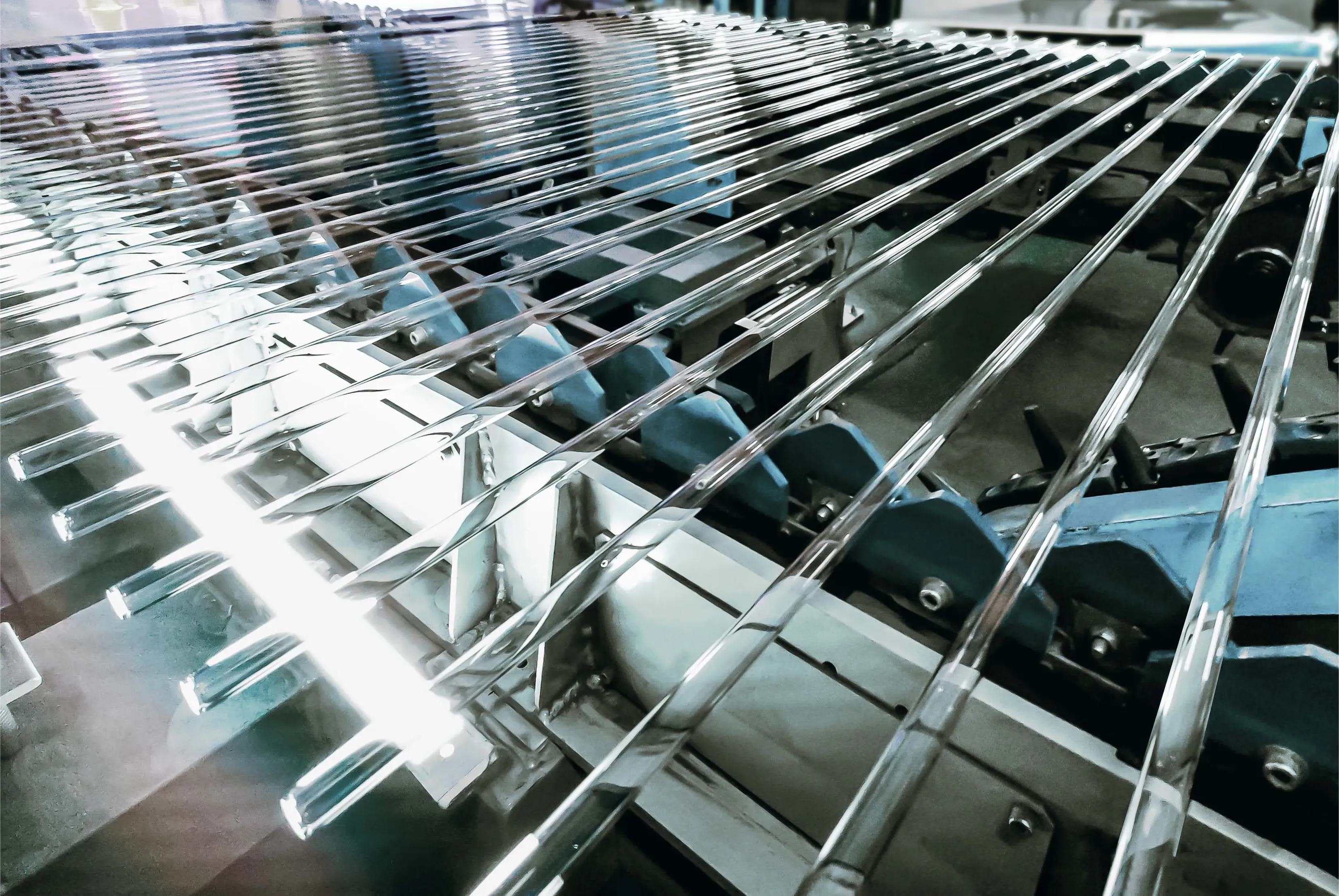
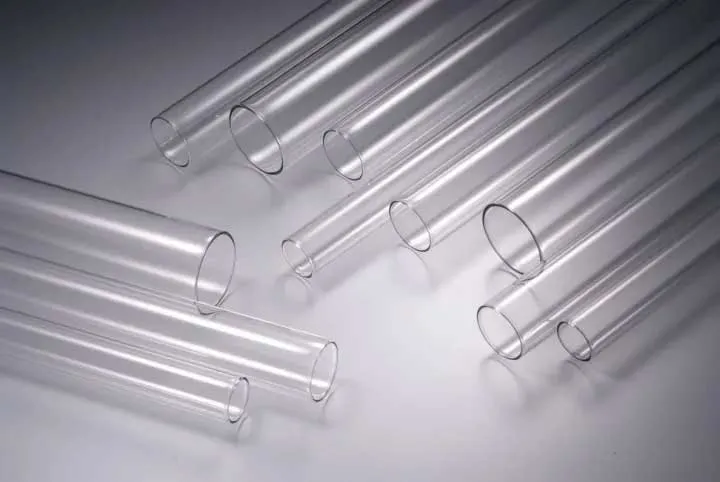
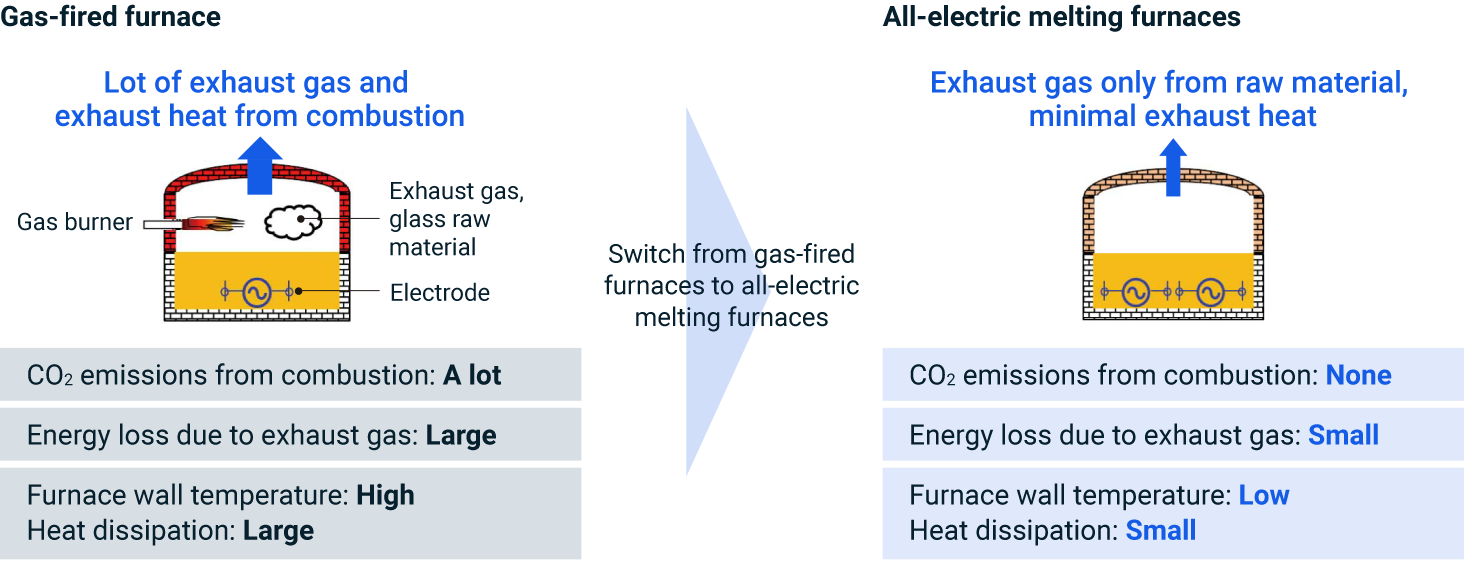
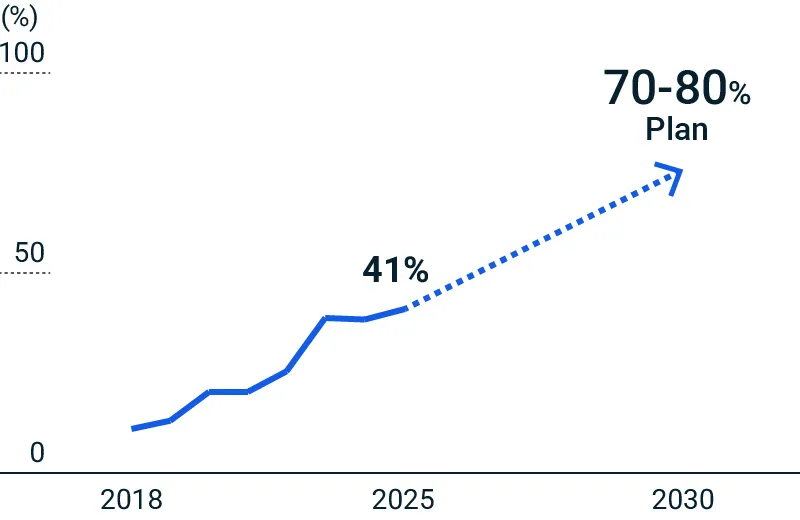
We currently use both gas and electricity as power sources for our glass melting processes. When using electricity, we insert electrodes into the molten glass, a method of heating that uses the direct passage of electric current. This method is highly energy efficient and produces less exhaust heat than gas combustion. Electric processes also make it possible to reduce carbon emissions even further by introducing renewable energy sources. We are currently shifting to hybrid melting furnaces partially powered by electricity and ultimately intend to incorporate all-electric melting furnaces. Nippon Electric Glass (Malaysia) Sdn. Bhd., a Group company based in Selangor, Malaysia, which mass-produces high-quality pharmaceutical glass tube containers, converted a portion of its production to all-electric melting furnaces and began operating them in December 2025.
Gas-fired Furnace and All-electric Melting Furnace
Percentage of All-electric Melting Furnaces
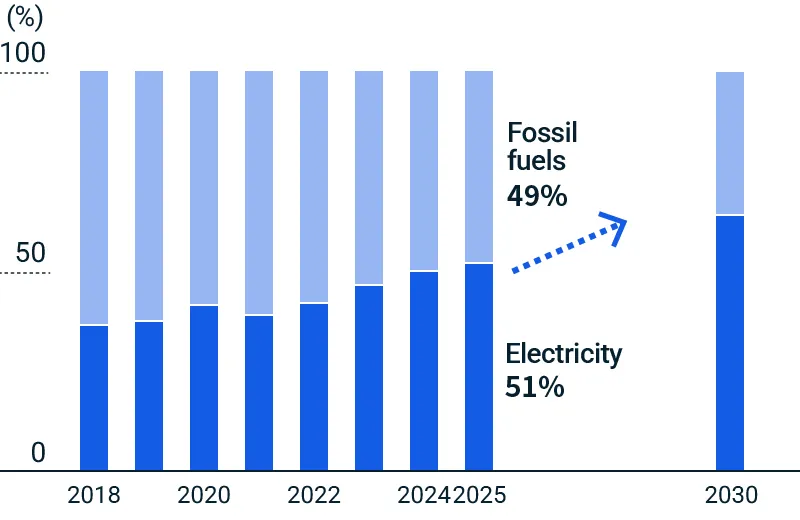
Electrification for Melting, Forming, and Processing Facilities (Energy Consumption Percentages)
Improving Energy Usage Efficiency
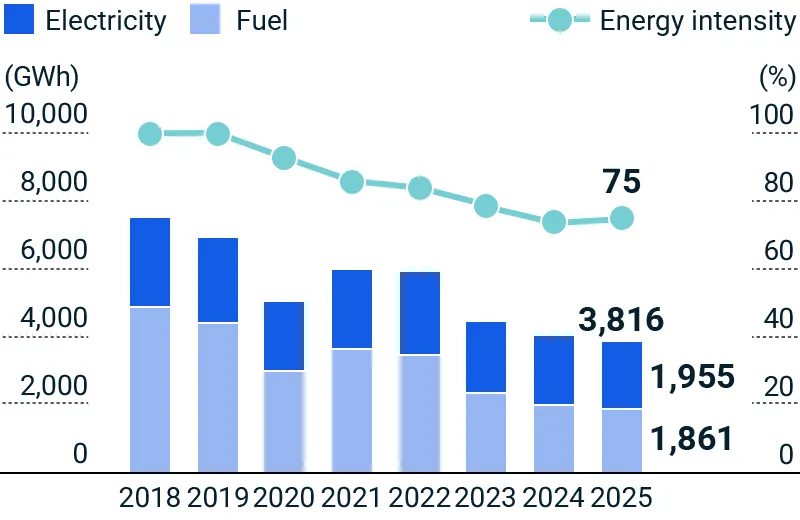
In fiscal 2021, we launched an energy business plan aimed at making energy usage visible across our global manufacturing processes (melting, forming, processing) and utility facilities. The plan focuses on promoting energy efficiency and reducing wasteful energy consumption.
We use the data we obtain to analyze and plan measures to boost productivity and with the aim of continually reducing energy intensity (the ratio of production weight). Each business division formulates specific plans to improve energy efficiency and meet intensity targets and applies the PDCA cycle to improve the effectiveness of their efforts. The targets and improvement measures align with our Carbon Neutrality Action Plan.
Energy intensity in fiscal 2025 was 25% lower than in fiscal 2018 and remained virtually unchanged from the previous fiscal year.
Utilizing Renewable Energy
We use renewable energy for part of our electricity consumption in order to reduce its CO2 emissions.
In fiscal 2025, the Group’s total renewable electricity usage, including both in-house generation and purchased electricity, amounted to 22.8 GWh, accounting for 1.2% of the Company’s total electricity consumption.
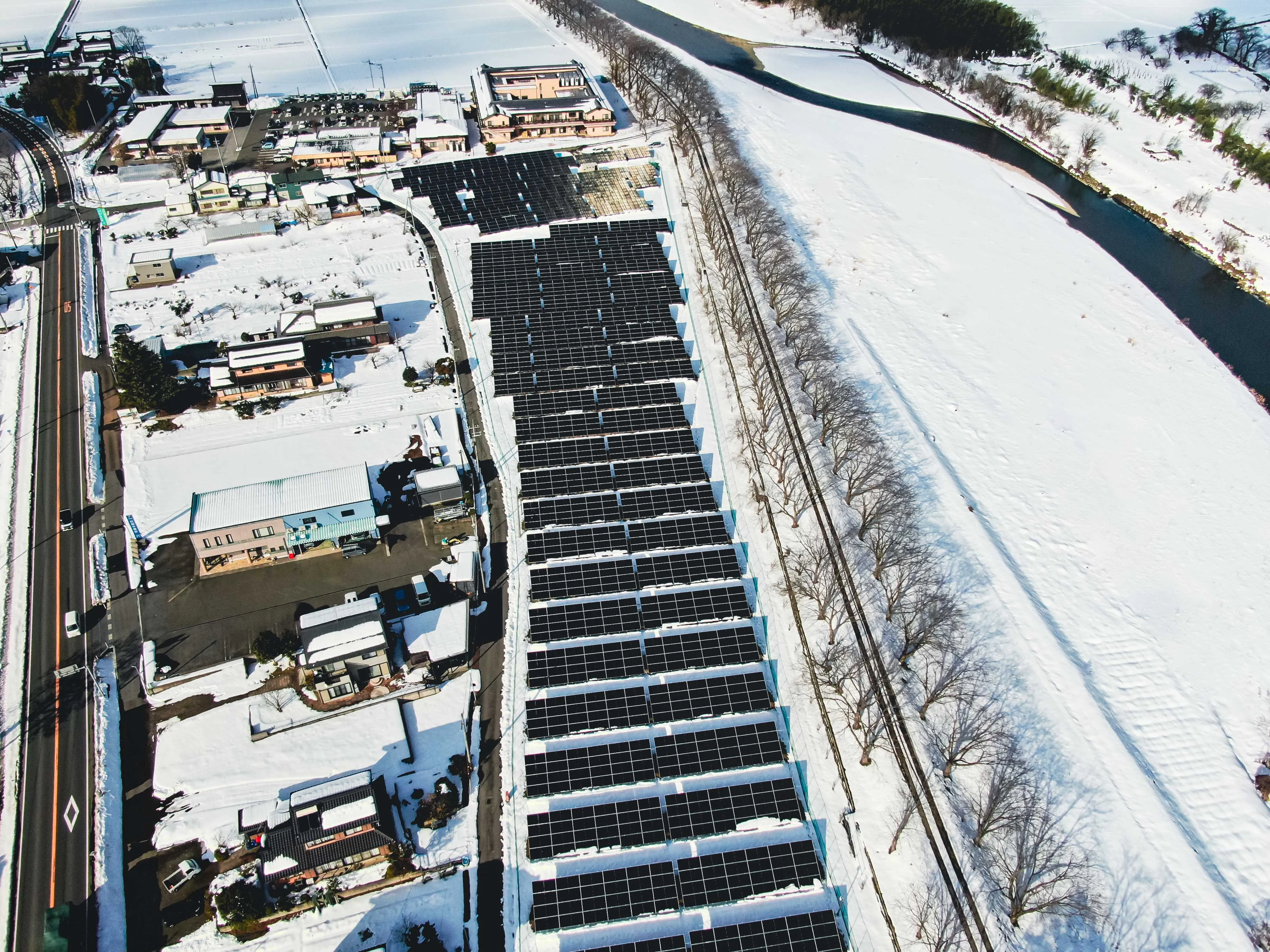
We installed a new solar power generation system off-site at the Shiga-Takatsuki Plant in fiscal 2025. The facility came online in February 2026. The electricity generated, supplied to the plant through a self-consignment system, is expected to reduce CO2 emissions by approximately 500 tons per year.
CO2 Emissions and CO2 Emissions Intensity
In fiscal 2025, energy consumption decreased from the previous fiscal year, mainly due to productivity improvements in the displays business and business restructuring in the composites business. However, Scope 1 plus 2 CO2 emissions increased due to a revised CO2 emission factor used in the third-party verification process, resulting in Scope 1 plus 2 CO2 emissions intensity increasing to 77% of the fiscal 2018 level.
We have already achieved our fiscal 2030 Scope 1 plus 2 CO2 emissions target. The Group will continue to monitor our targets and initiatives while reviewing each country’s CO2 emission reduction targets and trends in green transformation (GX) policies.
CO2 Emissions (Scope 1 and 2)
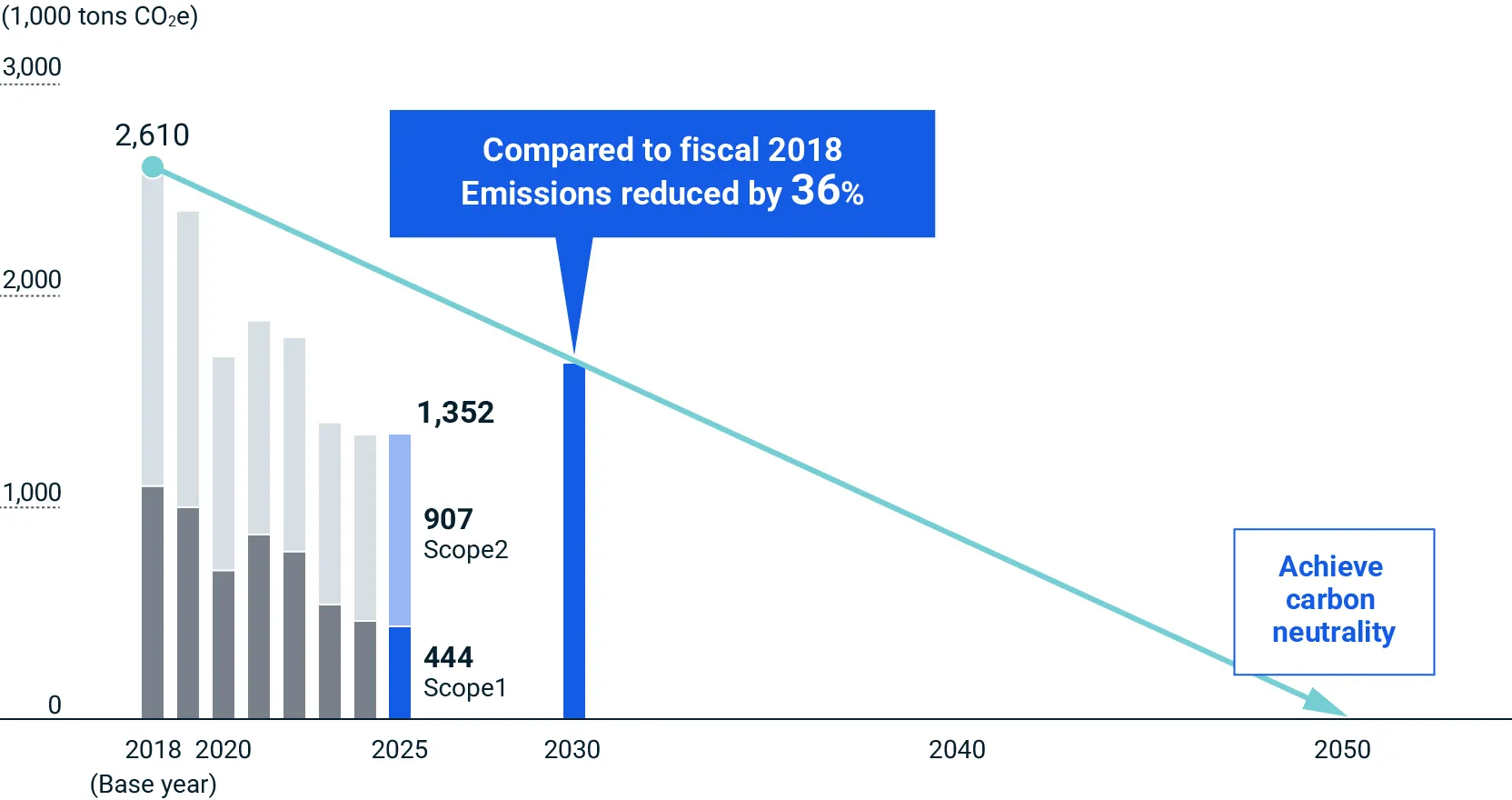
-
Calculated based on the GHG Protocol and ISO 14064-1. Scope 2 figures calculated using a market-based approach.
The Group conducts third-party verification through limited assurance engagements.
CO2 Emissions (Scope 3)
| Category | Fiscal 2025 | |
|---|---|---|
| 1 | Purchased goods and services | 615 |
| 2 | Capital goods | 105 |
| 3 | Fuel and energy-related activities | 188 |
| 4 | Upstream transportation and distribution | 416 |
| 5 | Waste generated in operations | 12 |
| 6 | Business travel | 1 |
| 7 | Employee commuting | 2 |
| 8 | Upstream leased assets*1 | (Excluded categories) |
| 9 | Downstream transportation and distribution*2 | (Excluded categories) |
| 10 | Processing of sold products*2 | (Excluded categories) |
| 11 | Use of sold products*3 | (Not applicable) |
| 12 | End-of-life treatment of sold products | 175 |
| 13 | Downstream leased assets*4 | (Not applicable) |
| 14 | Franchises*4 | (Not applicable) |
| 15 | Investments*4 | (Not applicable) |
| Total | 1,516 | |
-
Category 8: Included in Scope 1 and 2 emissions
-
Categories 9 and 10: Not calculated due to the difficulty of obtaining reliable data because our products are used in a wide variety of applications and usage methods among customers
-
Category 11: No products directly emit GHG during use.
-
Categories 13, 14, 15: No business activities fall under these categories.
-
Emissions intensity figures are derived from the Japanese Ministry of the Environment’s Database for Calculating Greenhouse Gas Emissions from Organizations through the Supply Chain Ver. 3.5 and the Inventory Database for Environmental Analysis (IDEA) Ver 3.5.1.