Environmentally Friendly Products and Services
Developing Environmentally Friendly Products and services

We are committed to sustainability by offering products that support global environmental conservation.
Sales of environmentally friendly products and services : approximately 840 billion yen (fiscal 2025)
Saving Energy and Resources
E Glass Fiber: Chopped Strands
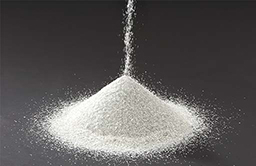
Our E Glass Fiber improves plastic strength, heat resistance, rigidity, and dimensional stability. E Glass Fiber used to reduce automobile weight and enable miniaturized and thinner electronic devices.
E Glass Fiber Flat Glass Fiber: INNOFIBER™
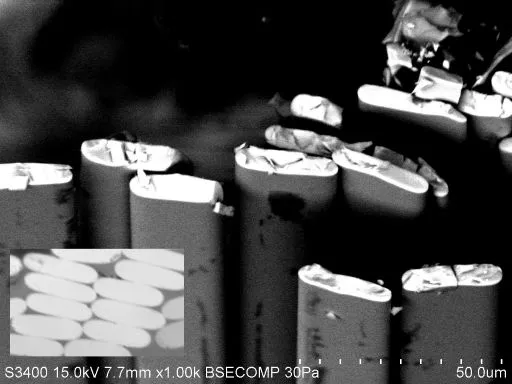
INNOFIBER™ is a high-performance material offering numerous outstanding properties, including dimensional stability, strength, surface smoothness, and impact resistance in molded products. The versatility of the material allows it to be used for complex and thin-walled shapes that significantly improve product quality. The material is also highly recyclable, contributing to environmentally friendly and sustainable product development.
Low-Dielectric Glass Fiber: D2 Fiber Yarn
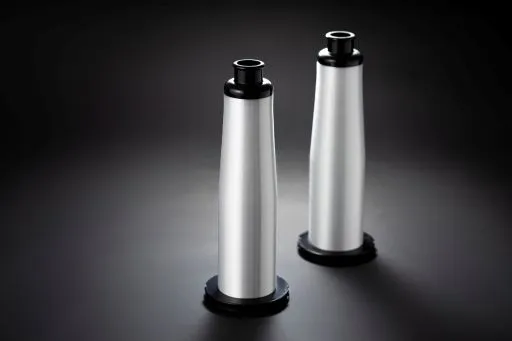
D2 Fiber Yarn’s excellent low-dielectric properties reduce transmission loss, heat generation, cooling load, and power consumption, supporting the sustainable operation of infrastructure, such as AI servers, high-frequency communication equipment substrates, and semiconductor packaging substrates.
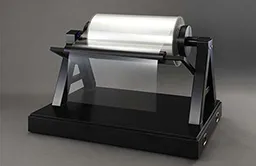
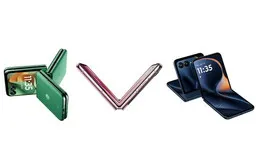
Ultra-Thin Glass: G-Leaf™, Dinorex UTG™
G-Leaf™ is an ultra-thin, bendable glass with a thickness of only tens of microns. Dinorex UTG™ is an ultra-thin glass for chemical strengthening developed for foldable display cover glass. The high surface smoothness and uniform thickness of these glasses allow excellent bending properties, opening the door for development of new electronic devices. These glass products also increase manufacturing process efficiency by reducing device weight and being suitable for roll-to-roll manufacturing, and saving resources by eliminating the need for chemical glass slimming processes.
Phosphor-Glass Composite: Lumiphous™
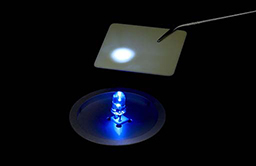
Lumiphous™ is a wavelength-conversion material that expands the range of applications for energy-saving LED lighting.
Composite Powder for LTCC
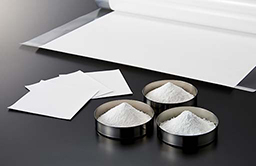
Our composite powder for low-temperature co-fired ceramics (LTCC) incorporates highly conductive gold or silver in the inner layer of the conductor, enabling circuit boards that deliver excellent electrical performance while reducing energy consumption.
Insulating Glass Unit: FireLite™
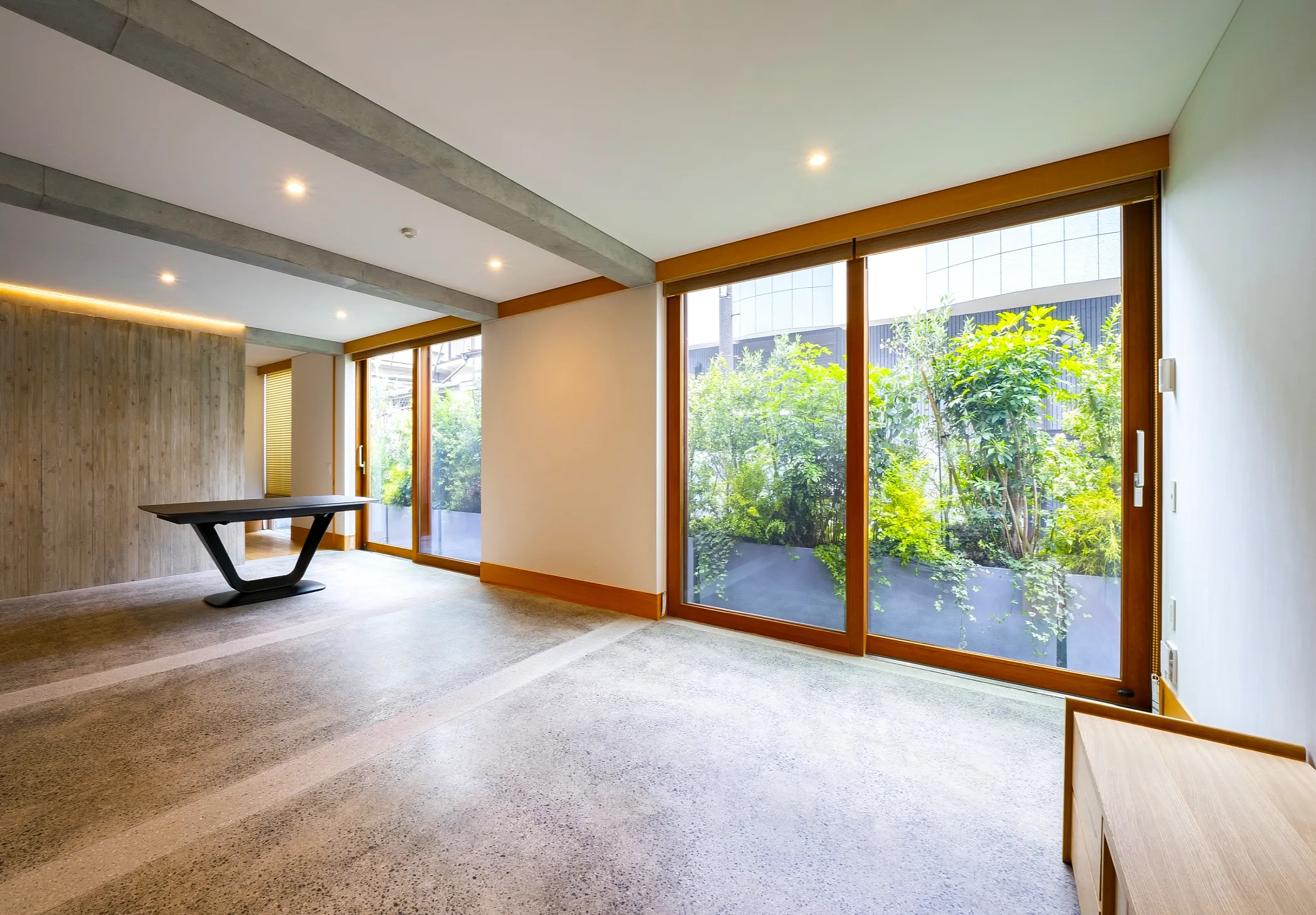
Our FireLite™ insulating glass is the only fire-resistant glass capable of withstanding both intense heat during a fire and rapid cooling from firefighting efforts. Combining FireLite™ and low-radiation glass with plastic or wooden sashes creates a highly insulated fire window that enhances building and home safety, comfort, and energy performance.
Acquired Environmental Product Declaration for Firelight™

Firelight™ received approval for the SuMPO EPD environmental label program of the Sustainable Management Promotion Organization (SuMPO). An Environmental Product Declaration (EPD) is an international environmental label awarded based on a comprehensive assessment of a product’s lifecycle environmental impact, including CO2 emissions, and verified by an independent third party. Using Firelight™ in building construction enables the tracking of environmental impacts from raw material procurement through to factory shipment, thereby meeting the need for building materials selected based on their environmental impact.
Inorganic Core Substrate: Glass-Ceramic Core GC Core™
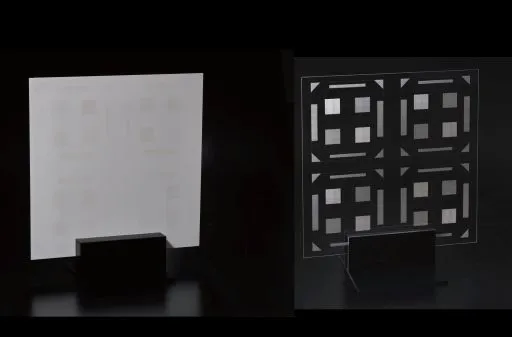
GC Core™ products are substrate materials for next-generation semiconductor packaging used in data centers and generative AI. The products are large through glass vias (TGV) glass-core substrates compatible with CO2 laser processing, and glass-ceramic (GC) core substrates capable of high-speed, crack-free drilling. The inorganic core substrates conserve energy and improve semiconductor performance and density.
Creating Energy
E Glass Fiber: Roving
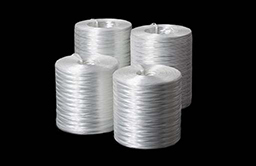
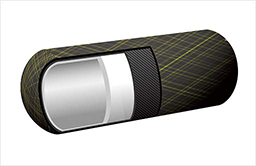
Our Roving E Glass Fiber is gaining increased use as reinforcement material for hydrogen tanks in fuel cell vehicles.
All-Solid-State Sodium Ion Secondary Battery
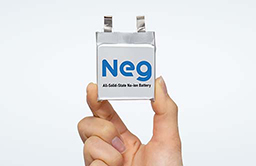
Our proprietary glass-ceramic technology integrates the anode, cathode, and solid electrolyte, all composed of stable oxides, into a strong, unified structure. This innovative all-solid-state sodium-ion secondary battery operates in extreme conditions (–40°C to 200°C) with no risk of fire or toxic gas emissions. Using sodium, a readily available resource, it also alleviates concerns about raw material procurement.
Ultra-Thin Cover Glass for Satellite Solar Panels
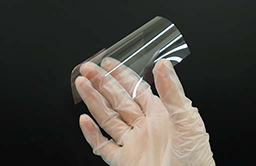
Our ultra-thin cover glass protects satellite solar cells from ultraviolet light deterioration in outer space while also reducing their weight.
Reducing Environmental Impact
High-Efficiency Deep UV Transmitting Glass
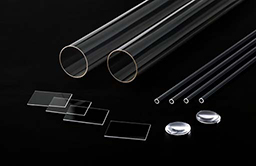
Designed for use in LED antiseptic lamps, this glass helps replace lamps that contain environmentally harmful mercury.
Fluorine-Free Water- and Oil-Repellent Films
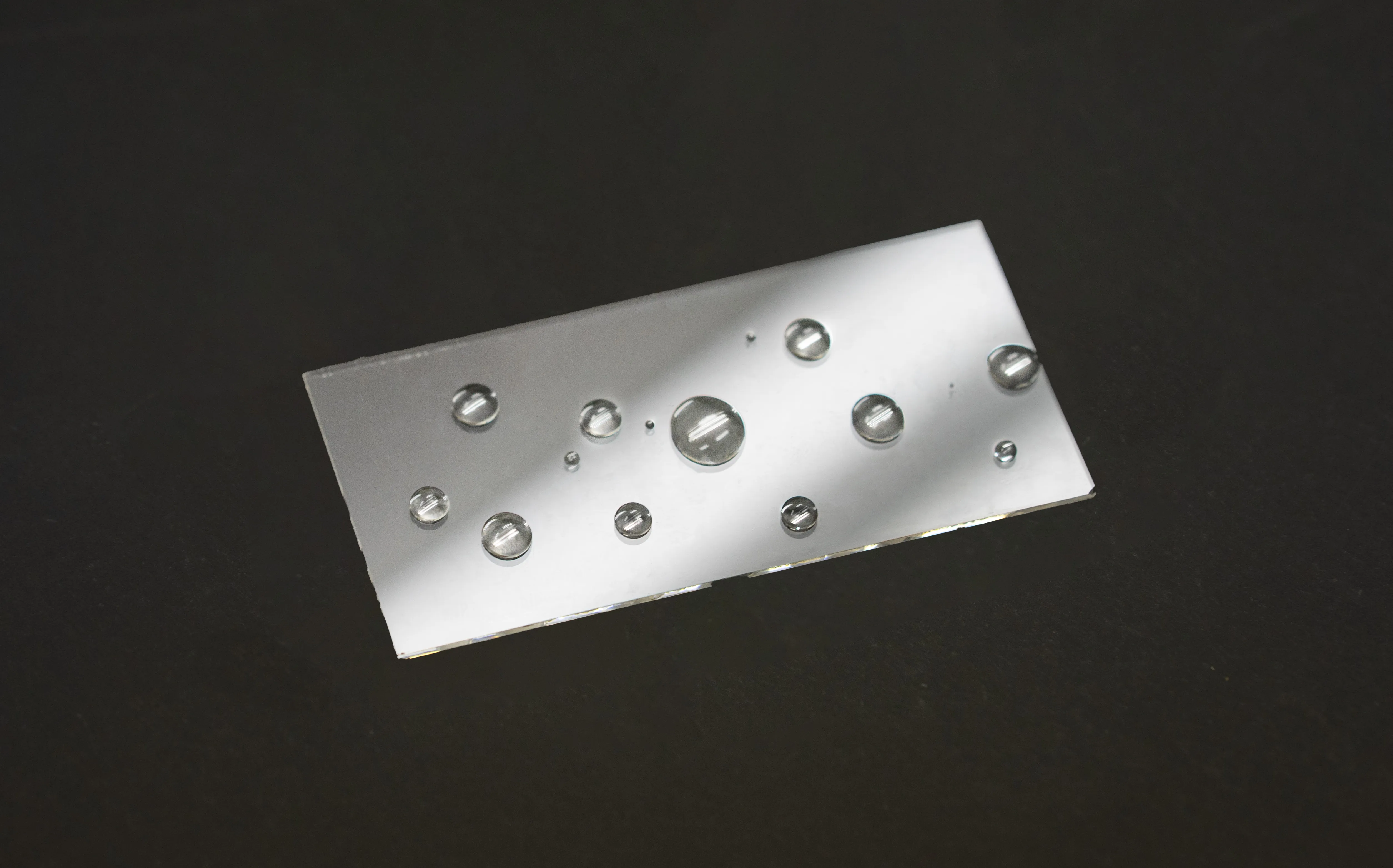
We have succeeded in developing a fluorine-free, water- and oil-repellent membrane that complies with regulations on per- and poly-fluoroalkyl substances (PFAS). These films offer excellent visible light transmission and heat resistance.We will continue developing our coating and coating material design technologies while working to create new markets and contribute to a safe and healthy living environment.
Oxy-Fuel Combustion Technology: NOFC™

Our oxy-fuel combustion glass melting technology significantly reduces CO2 emissions compared with air combustion, improving the energy efficiency of glass melting furnaces and helping customers save energy and reduce emissions. We also support hydrogen fuel combustion, enabling even cleaner manufacturing processes.
Electric Melting Technology: NEMT™
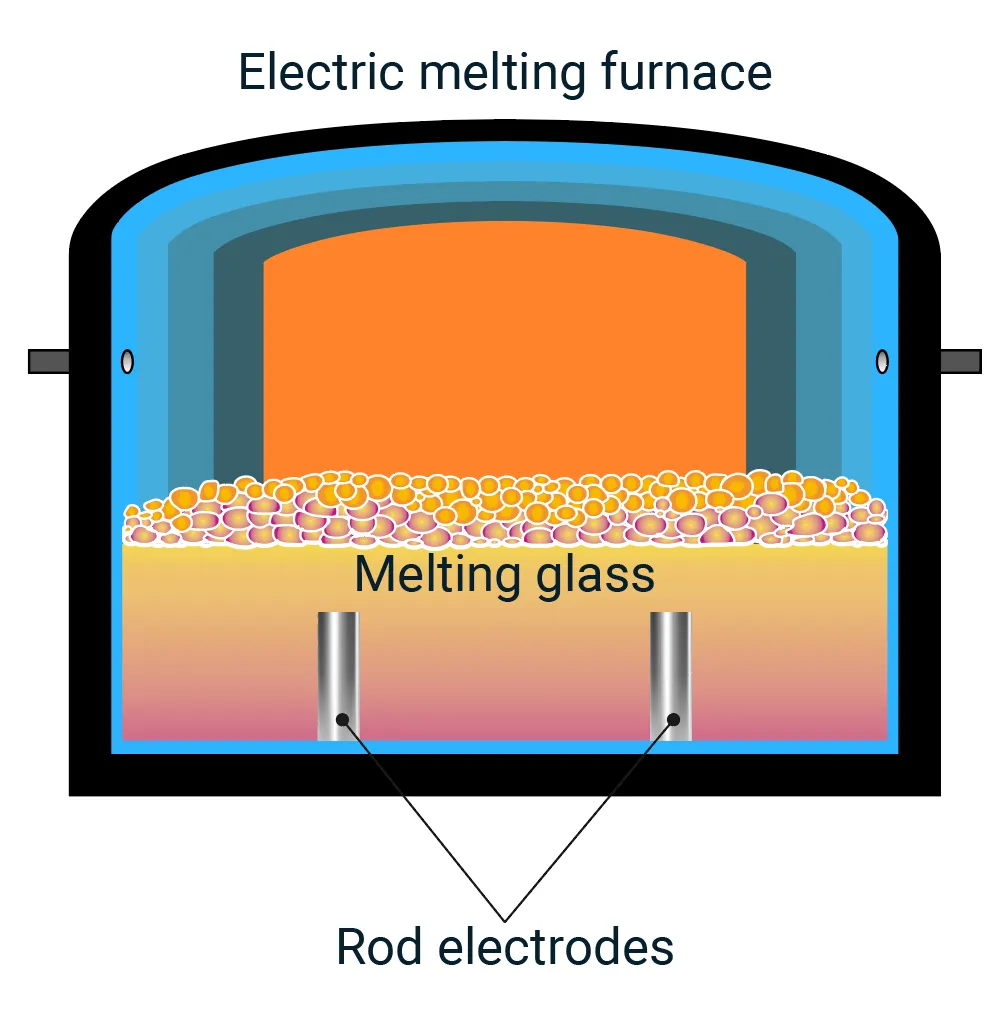
NEMT™ employs electrodes inserted into the glass to enable direct electric melting. This technology improves energy efficiency, reduces CO2 emissions, and supports resource conservation.
Furnace Control System: NFCS™
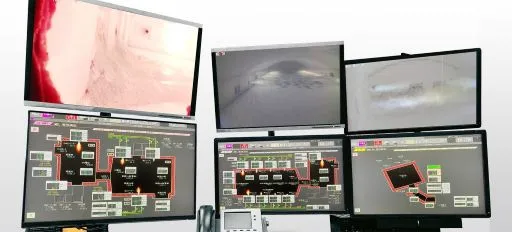
The NFCS™ combustion control system maintains optimal combustion conditions through real-time monitoring and control of fuel supply, temperature, and heat fluctuations in glass melting furnaces. The system enhances glass product quality while ensuring safe and reliable operation. Highly fuel efficient, NFCS™ also reduces environmental impact, delivering both significant energy savings and CO2 emissions reductions.