Sustainability Foundation
History of Sustainability Initiatives
In the early 1970s, addressing pollution issues at our Fujisawa Plant (which closed in 2015) taught us the critical importance of environmental conservation for sustaining our business. Glass manufacturing requires substantial energy and resources, and we use what we have learned to reduce consumption and minimize the environmental impact of our operations. We are committed to conducting our business in harmony with the environment. Alongside this, we have made community contributions, focusing on local education initiatives and active efforts to employ individuals with disabilities.
Building on this history, the Company defined the guiding principles for these activities, identified material issues, and established basic policies in 2017, and continues to advance initiatives as part of its CSR activities.
To further advance Group strategies for sustainable growth, we redefined our fundamental approach to sustainability and revised our sustainability promotion structure and materiality, effective January 1, 2026. Sustainability is central to our commitment to achieving sustainable growth in harmony with the environment, society, and the economy, and it is essential to continuing to build our corporate value.
Basic Approach to Sustainability
The Nippon Electric Glass Group will conduct its business activities in harmony with the environment, society, and economy, and seek to achieve sustainable growth and enhance its corporate value.
To support these initiatives, we will make effective use of our management resources, including human resources, capital, assets, technology, and information, while maintaining robust corporate governance to ensure effective implementation of our sustainability initiatives.
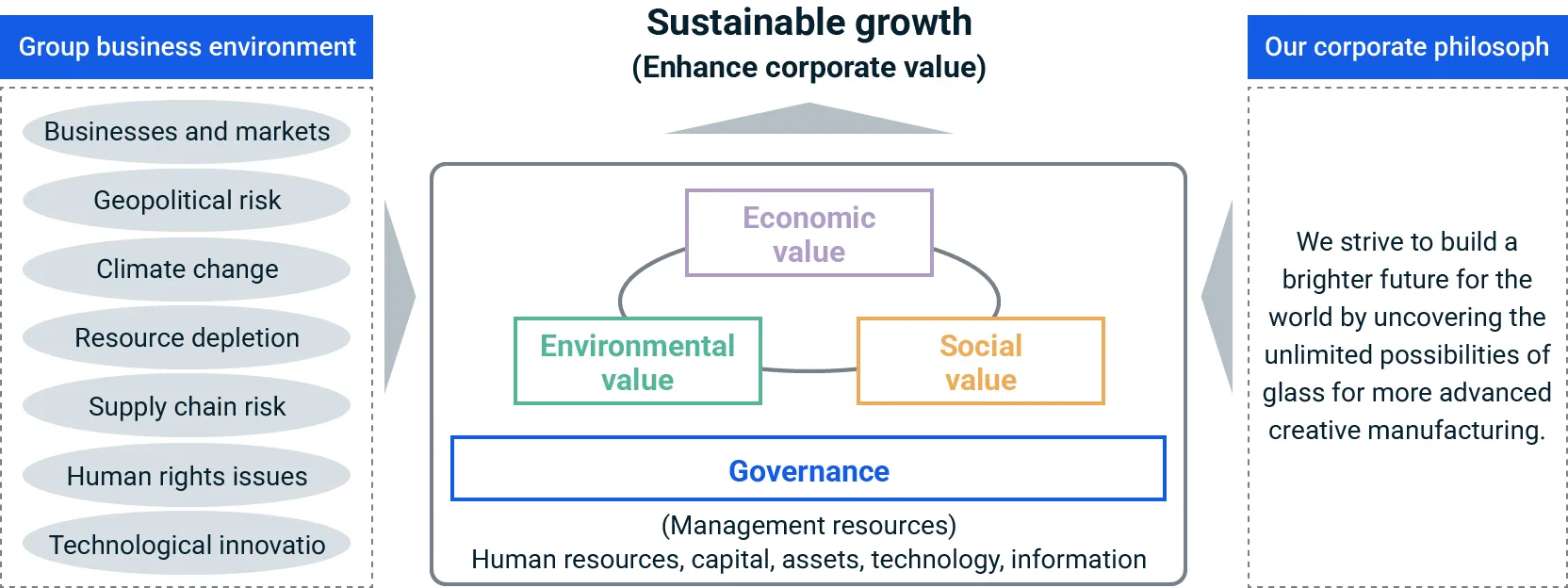
Sustainability Promotion Structure
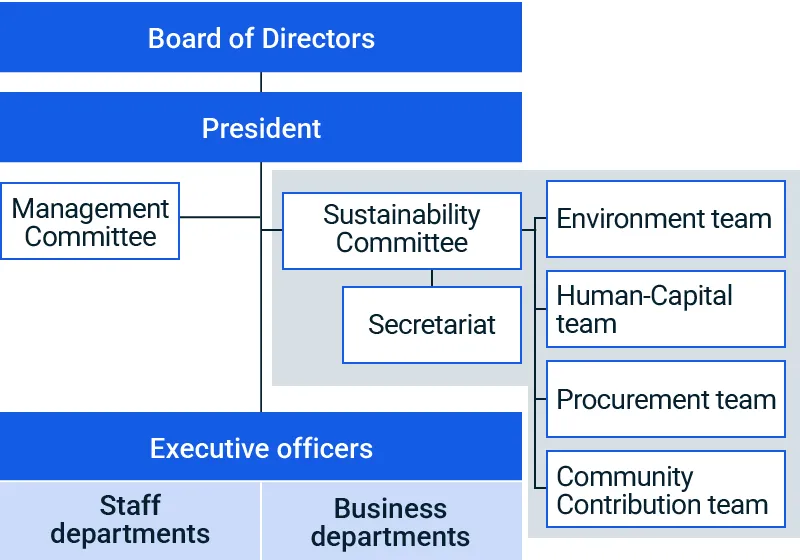
On January 1, 2026, we reorganized the former CSR Committee into the Sustainability Committee to comprehensively review the direction and scope of our sustainability initiatives, provide recommendations to management, promote agile implementation, and ensure timely and accurate information disclosure.
Board of Directors
The Board of Directors makes decisions on important management affairs of the NEG Group and supervises the execution of business affairs. The Board of Directors also addresses sustainability-related management issues, including establishing the sustainability structure; setting priority issues, measures, and targets toward resolution; and providing the president, who serves as the person in charge of business execution, with assessments and counsel on sustainability activities. Outside officers (four outside directors and two outside corporate auditors) participate in meetings of the Board of Directors.
President
The president is responsible for the execution of business and implements measures in accordance with the resolutions and advice of the Board of Directors.
Management Committee
The Management Committee deliberates matters important to company management and draws up detailed action plans for decisions made at the Board of Directors meetings.
Sustainability Committee
The Sustainability Committee formulates basic policies related to Group sustainability, identifies material issues, and develops, reviews, and advances measures for each issue. It also establishes and deliberates on information disclosure policies and content. In addition, the committee addresses a broad range of topics, including the Sustainable Development Goals, with a focus on materiality.
The committee is chaired by an executive officer in charge of corporate communications and is composed of heads of departments related to sustainability. The secretariat is located in the Corporate Communications Department.
Four working teams have been established and work together to increase the effectiveness of activities for the materiality issues. The Environmental Team focuses on climate change response and environmental conservation; the Human Capital Team promotes the active participation of diverse talent, enhances the workplace environment, and oversees health and safety; the Procurement Team addresses environmental and human rights issues within the supply chain; and the Community Contribution Team is dedicated to educational support.
Executive officers, staff and business departments
Executive officers, staff and business departments implement initiatives formulated, reviewed, and promoted by the Sustainability Committee to mitigate risks and capitalize on opportunities related to the items of materiality.