Risk Management
Risk Management Policy
Our Group periodically conducts business risk assessments based on our policy on internal control, and takes the necessary steps to manage such risks. In cases involving any business risks that are deemed significant, responsible divisions or specialized committees formulate regulations and guidelines, conduct training, prepare manuals, and undertake additional activities as deemed necessary.
Business Risks
Risk assessments are conducted at all Group sites.
| Risk | Content | Possibility | Impact | Response | ||||||||||||||||||||||
| 1. Risks related to procurement of materials and other items | Limited supply or delays for raw materials and fuels, or rising prices of such materials or logistical costs | Medium | Large | Maintain strong relationships with suppliers, develop and diversify the supplier base, and shift to general-purpose products | ||||||||||||||||||||||
| 2. Risks related to natural disasters, accidents, and outbreaks of communicable disease | Suspension of operations or delays in production and shipments , and costs to repair facilities, due to natural disasters such as earthquakes, typhoons, and heavy rains, or accidents such as fires and power outages, or outbreaks of infectious disease (including such occurrences affecting the supply chain) | Medium | Large | Implement a business continuity plan (BCP), provide seismic reinforcement of structures, implement disaster preparedness measures, arrange dispersed manufacturing sites, and prevent the introduction and spread of communicable diseases. | ||||||||||||||||||||||
| 3. Risks related to information security | Claims for damages arising from the leakage of confidential information obtained in the course of business, reputational damage resulting from such incidents, and the suspension of business activities or information systems due to computer viruses or cyberattacks | Medium | Medium | Establish an Information Management Committee, establish a Computer Security Incident Response Team (CSIRT), carry out incident response drills, deploy security systems, and provide in-house training | ||||||||||||||||||||||
| 4. Drastic changes in demand and market structure | Contracted demand for existing products due to technological innovation, or fluctuation of price or supply of products due to intensified competition | Medium | Medium | Promote R&D and proactive sales to address emerging needs | ||||||||||||||||||||||
| 5. Capital expenditure risks | Significant change in demand forecast, shortage of plant capacity, sudden change in price of major equipment or materials | Medium | Medium | When and however necessary, build new production facilities and continuously upgrade them | ||||||||||||||||||||||
| 6. Environmental risks | A shift to stricter environmental regulations, or more corporate responsibilities related to the environment demanded by society | Medium | Medium | Develop environmentally friendly products, ensure that facilities and management systems exert minimal impact on the environment, raise production efficiency, practice the 3Rs (Reduce, Reuse, and Recycle), strengthen efforts to reduce carbon emissions, and promote disclosure based on TCFD recommendations | ||||||||||||||||||||||
| 7. Risks related to the sales of certain products | Change in investment or sales plan or material procurement policy of our major customers | Medium | Medium | Diversify our customer base. | ||||||||||||||||||||||
| 8. Risks related to overseas business operations | Unanticipated changes in laws or regulations, international tax risks, specific trade practices, shifts in political or social conditions, and social turmoil caused by terrorism, war, outbreaks of infectious disease, or other factors | Medium | Medium | Facilitate close communication between overseas subsidiaries and local authorities, and get advice from experts. | ||||||||||||||||||||||
| 9. Risks related to labor and securing human resources | Difficulty in securing appropriate human resources for future business development and labor-related compliance violations | Medium | Medium | Secure an optimal and effective workforce through active recruitment and training of diverse personnel, achieve labor saving through automation and other means, and institute labor management according to laws and regulations. | ||||||||||||||||||||||
| 10. Risks related to intellectual property rights | A litigation related to intellectual property rights | Medium | Medium | Obtain intellectual property rights useful for business, survey and monitor other companies’ intellectual property rights, develop alternative technologies, and take over or license intellectual property from other companies. | ||||||||||||||||||||||
| 11. Risks related to legal restrictions | Violation of the laws or regulations of the country or region where we operate | Medium | Small | Comply with laws and regulations, survey changes in legal revisions, and hold periodic in-house education and audits. | ||||||||||||||||||||||
| 12. Risks related to fluctuations in currency exchange rates and interest rates | Fluctuations in currency exchange rates and interest rates | Medium | Small | Utilize forward exchange contracts, properly manage interest-bearing debt, and secure partial financing of fixed-interest-rate loans. | ||||||||||||||||||||||
Business Continuity Plan
Implementing Business Continuity Plan
To be prepared for disasters such as earthquakes, typhoons, floods, fires, and mass infections, we created a disaster management manual based on the Company’s disaster preparedness regulations, and we carry out emergency drills periodically. In the wake of the 2011 Great East Japan Earthquake, we reviewed our disaster management measures and implemented seismic reinforcement to our buildings, production facilities, and equipment.
In 2015, we introduced a business continuity plan (BCP) to replace the previous disaster preparedness regulations. To support its implementation, we developed a manual outlining detailed preparation procedures and the actions to be taken in the event of an emergency or disaster. In accordance with the implementation of BCP, we have also introduced a system that will efficiently confirm the whereabouts of all domestic employees and their families in case of an emergency. Moreover, in order to resume production and continue to supply our customers in the aftermath of a disaster, we are working to strengthen our procurement-related risk management system.
BCP Activation Structure
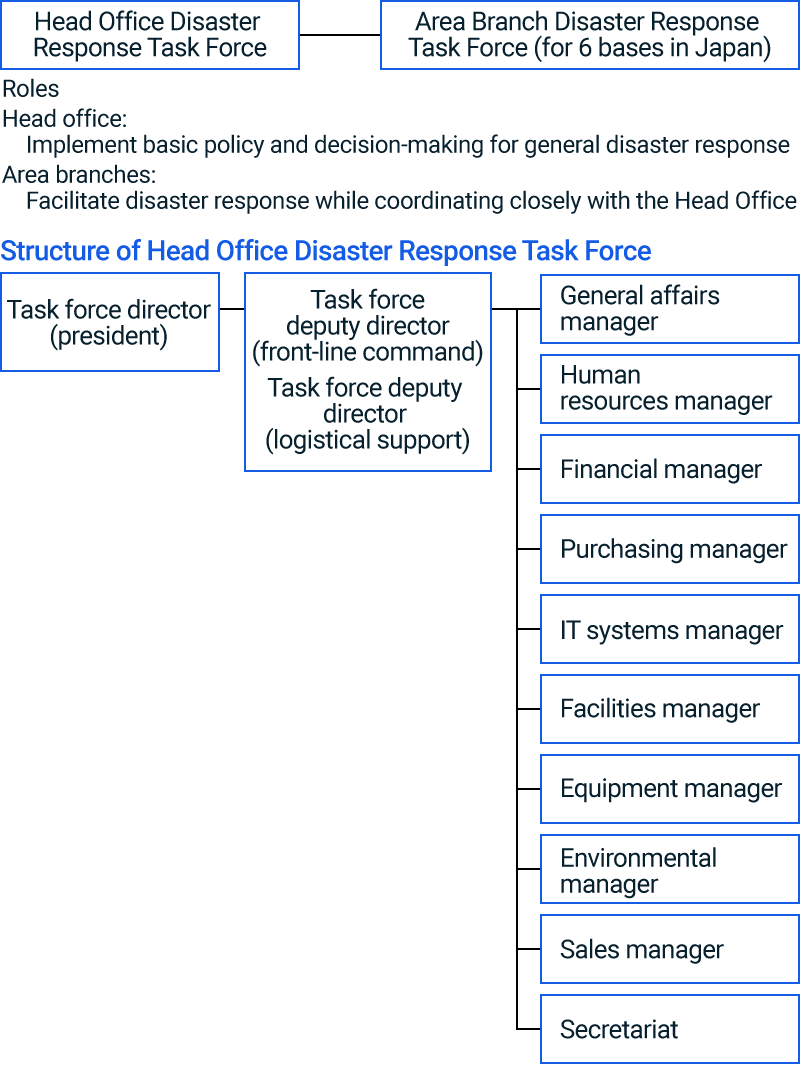
BCP Basic Policy
-
Protect each employee and their families and secure their safety
-
Protect production equipment, prevent the spread of damage as well as secondary disasters from occurring within the Company and the adjacent communities, and help with rescue efforts
-
Resume providing customers with products and services as rapidly as possible
BCP Response Training
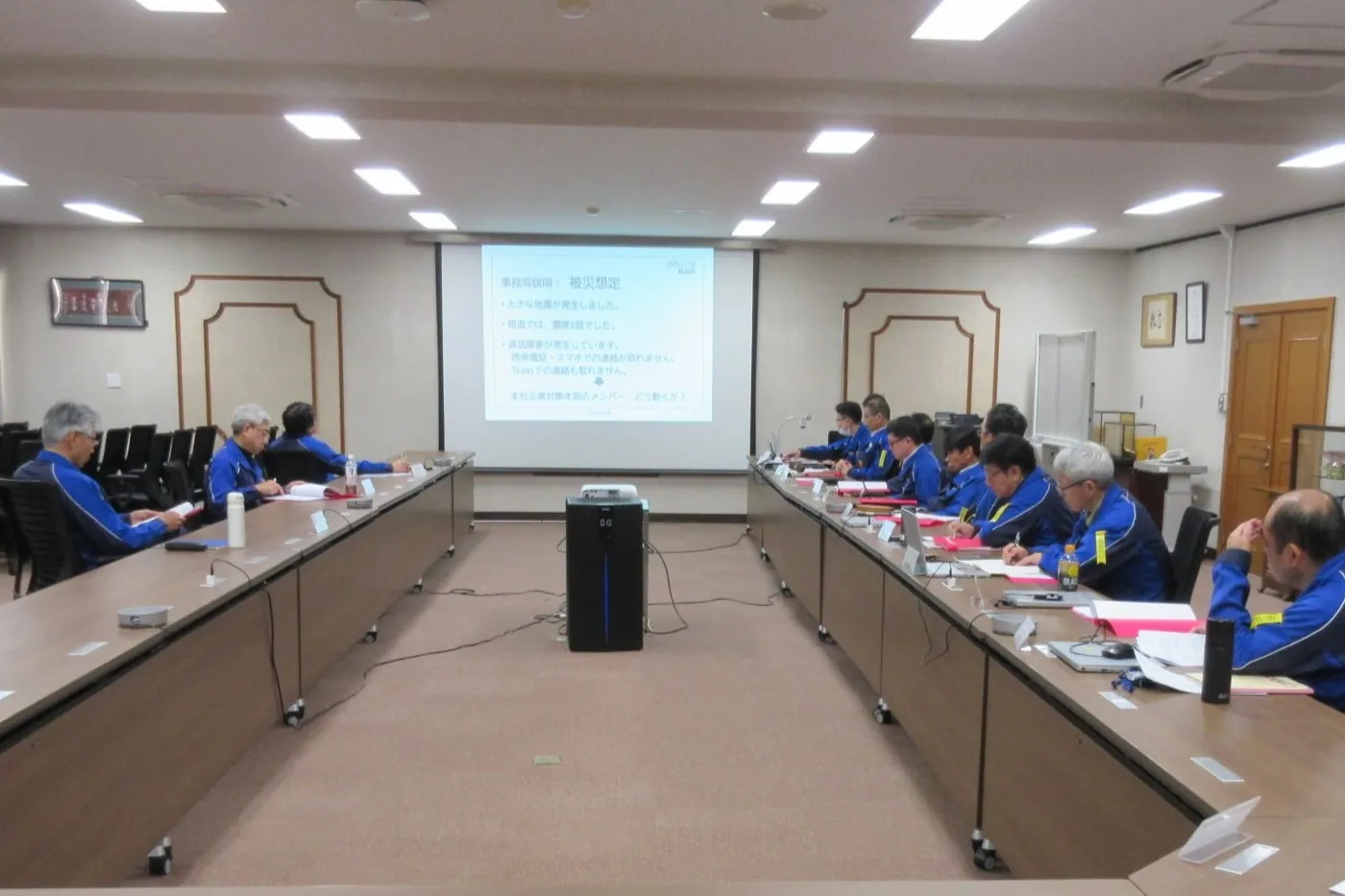
The BCP drill conducted in November 2025, based on a major earthquake scenario with limited communications, included training on initial response procedures and helped identify areas requiring additional preparation.
Information Security
Every year, ransomware and other types of cyberattacks are becoming more advanced and sophisticated. The number of companies being affected is also growing, presenting an increasing risk to business. We are working to strengthen the risk responsiveness of our systems, organization, and personnel. In addition to our existing training and education for employees, we maintain a Computer Security Incident Response Team (CSIRT) and have created a manual for responding to computer security incidents. CSIRT conducts regular training activities to prepare for a possible incident.